A NiMH cell rarely dies from being used; it ages from being over-filled. Because overcharge current is consumed by the oxygen recombination loop as heat and oxidising chemistry, every minute spent beyond full charge attacks the three components that determine life - the nickel positive, the hydride-alloy negative and the separator-electrolyte system. This paper traces each overcharge-driven degradation mechanism to its electrochemistry, explains why the same capacity delivered with different charge protocols can yield very different cycle lives, and quantifies the design levers - crisp termination, reduced-current top-off, thermal control - by which charging practice becomes the single largest controllable determinant of NiMH longevity.
Aggressive overcharge drives the nickel positive beyond the beta-NiOOH state into the gamma-NiOOH phase, whose interlayer spacing is larger; repeated beta-gamma cycling mechanically swells and cracks the active mass, sheds material and progressively loses usable capacity. Gamma formation is favoured by high potential, high temperature and sustained overcharge - precisely the conditions of a late or missing fast-charge termination.
Charge protocol controls exposure directly: terminating at the inflection or -delta-V rather than holding current through the recombination plateau minimises time at the oxidising potential, and a reduced-current top-off adds the final percent without dwelling in the gamma-forming regime, preserving the positive's structural integrity over hundreds of cycles.
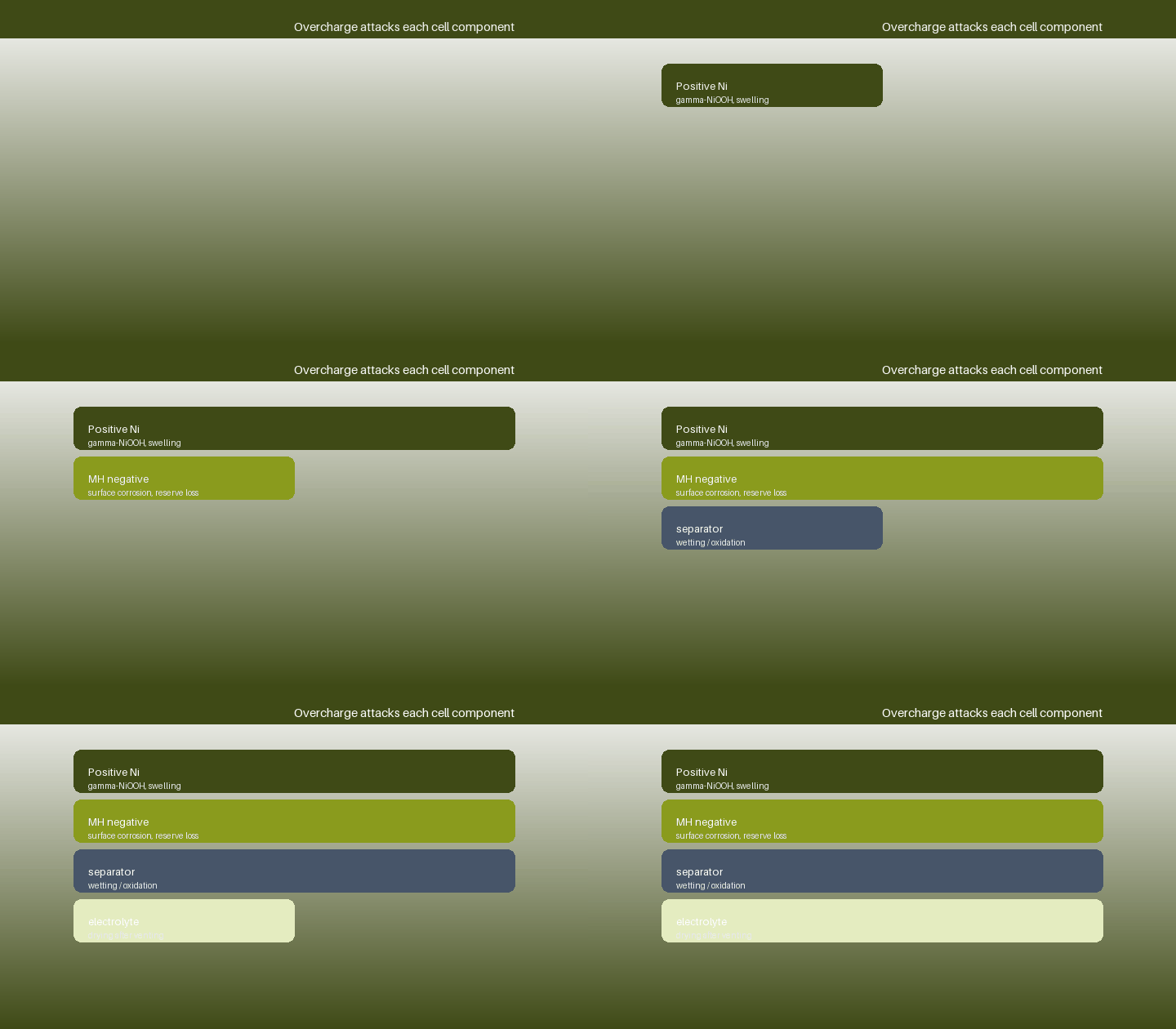
The hydride alloy survives because its surface hosts a catalytic, oxide-bearing layer that both splits water and recombines oxygen; sustained overcharge and heat thicken this surface into a less conductive corrosion layer, consume alloy that could store hydrogen, and leach elements into the electrolyte. The oversized negative - the feature that makes sealed operation possible (Paper 1) - is a finite reserve that corrosion erodes cycle by cycle; once it shrinks enough, hydrogen evolution and pressure rise mark accelerated end of life.
Temperature is the corrosion accelerator, following Arrhenius-like kinetics, so the thermal discipline of Papers 4 and 7 is simultaneously a life strategy: a charge profile that keeps the cell cool protects the negative reserve, while a profile that routinely reaches the absolute temperature limit spends it quickly.
Oxygen recombination and oxidising potentials age the polyolefin separator, degrading its wettability and gas-transport balance, while every vent event - and micro-venting under repeated high pressure - permanently removes electrolyte water and potassium hydroxide. As electrolyte redistributes and dries, internal resistance climbs (the impedance signature of Paper 17), recombination slows, pressure rises for the same current, and the cell enters a self-reinforcing decline where each charge runs hotter and loses more.
This is why pressure management (Paper 3) is life management: staying well below the vent threshold, and avoiding charge currents that accumulate gas faster than it recombines, preserves the finite electrolyte inventory on which every later cycle depends.
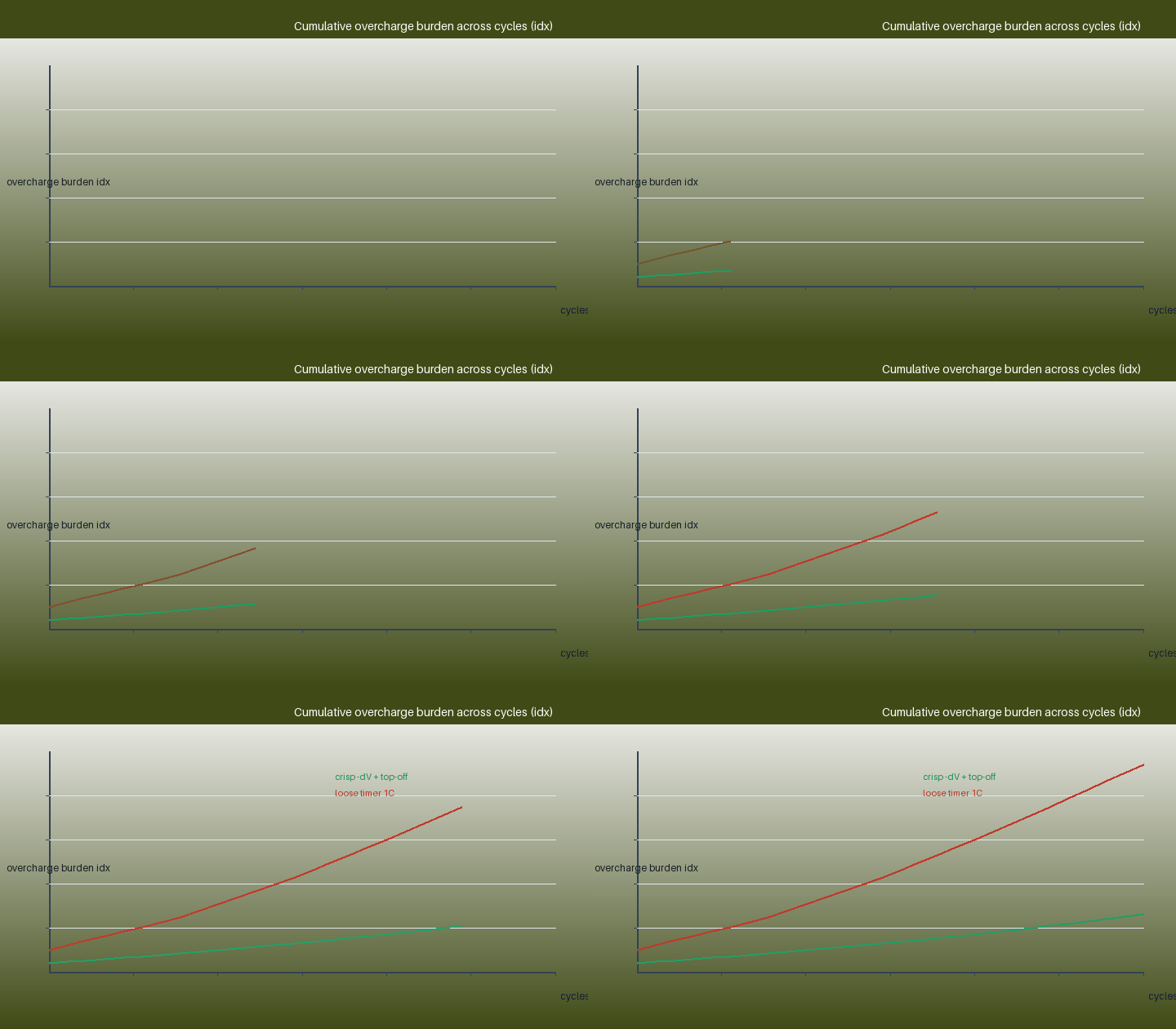
Cycle-life comparisons consistently show that for a fixed depth of discharge, charge regime dominates: a 0.5C charge with multi-criterion termination and a short top-off reaches far more cycles to a given capacity-retention threshold than a 1C charge terminated by a loose timer, even though both deliver the same energy. The damaging variables decompose into time spent overcharged, peak temperature reached, and peak pressure reached - all three set by the charger rather than the discharge application.
Multi-stage and pulse profiles (Papers 2, 13) extend life by the same route: they reduce the fraction of each charge spent in the recombination regime and flatten the temperature and pressure peaks, so less oxidation, corrosion and drying occur per delivered ampere-hour.
As a cell ages its charge signature changes in diagnosable ways: internal resistance rises, so the voltage peak arrives earlier and higher; the weakened negative and slowed recombination make dT/dt rise earlier and pressure climb faster; capacity fades, so a fixed timer overcharges an ever-smaller cell more severely. A charger that logs peak timing, resistance and termination temperature can therefore track health and adapt - reducing current or flagging replacement - rather than applying a fresh-cell profile to an aged cell.
The first figure maps overcharge mechanisms to the components they attack; the second contrasts the cumulative overcharge burden of crisp versus sloppy termination across cycles, the quantitative heart of the protocol lever.
A life-oriented charge specification minimises time beyond full charge by design: inflection or -delta-V primary stop under valid conditions, dT/dt covering warm operation, a bounded reduced-current top-off, pulse rather than continuous maintenance, strict absolute limits, and current derating as logged resistance rises. Cell selection complements protocol - grades with thicker negative reserves and recombination-optimised separators are specified for unavoidable fast charge.
Weijiang supplies cycle-life data under defined charge protocols so partners can select a grade and co-design a profile that meets a target cycles-to-80-percent rather than discovering overcharge wear in the field. The next paper examines a specific, often-misunderstood degradation mode that charging can either cause or cure - voltage depression, the memory effect.
Weijiang Power designs and manufactures nickel-metal hydride cells, matched packs and charging-ready configurations for consumer, industrial, medical and mobility customers, and supports partners with charge-protocol guidance, IEC 61951-2 performance files, IEC 62133-1 safety evidence and charger co-validation. Share your cell format, charge rate, thermal envelope and cycle target and our engineers will specify a cell-and-charge combination that protects both runtime and service life. Review the range on the products page.


