As 1.5 V lithium AA and AAA cells and small lithium power banks spread through the household, the safety contrast with nickel-metal hydride has become a genuine selling point - but only if explained accurately rather than by fear. This paper describes the intrinsic-safety basis of consumer NiMH: an aqueous alkaline electrolyte that simply cannot deliver a flammable organic-electrolyte thermal runaway, a sealed-cell design with oxygen recombination and a resealable vent that manages normal pressure, and a conservative energy content. It also states the honest limits - NiMH is not immune to misuse - to keep the safety claim credible.
The deepest safety difference is the electrolyte. NiMH uses a water-based alkaline electrolyte (potassium hydroxide in water); there is no flammable organic solvent of the kind that, in a lithium cell, can be released and ignited under internal failure. A lithium thermal runaway is a self-sustaining cascade - internal short, heat, separator breakdown, exothermic reactions, gas and possible ignition. A NiMH cell lacks the chemical pathway for that specific cascade; when abused it gets hot, may vent gas and will fail, but it does not carry the same self-feeding flammable-electrolyte mechanism. That is the meaning of 'intrinsically' safer: the hazard is absent by chemistry, not merely managed by protection electronics.
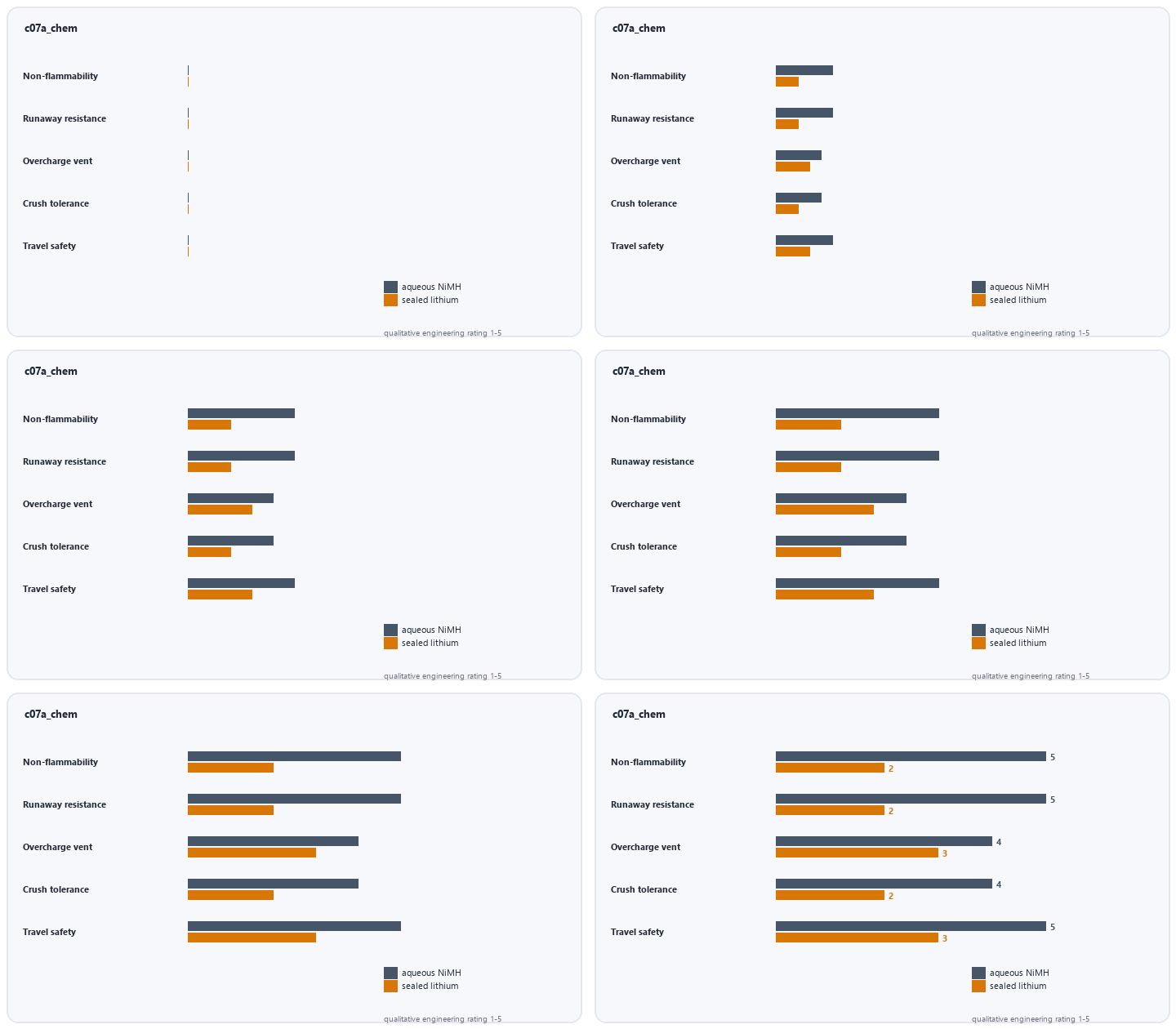
A sealed NiMH cell is engineered for the gas that overcharge inevitably produces. At the end of charge the positive electrode evolves oxygen, which diffuses through the separator and recombines at the negative electrode, balancing internal pressure during normal and mild-overcharge operation; a resealable safety vent opens if pressure nonetheless exceeds the design limit and reseals afterwards, rather than rupturing the can. This is why proper charge termination still matters - recombination has a finite rate - but it also means the cell tolerates the imperfect charging that real households impose far better than a chemistry with no such benign pressure-relief pathway.
NiMH operates at a 1.2 V nominal with a modest specific energy relative to lithium, so a single AA stores less total energy and releases it at a lower voltage. Lower voltage and lower stored energy translate directly into milder failure consequences: less heat available, lower arc and short-circuit energy, simpler protection in a device. For children's toys, bathroom devices and travel - the contexts where a battery is most likely to be mishandled, crushed or left in a hot car - that conservative energy budget is a design feature a specifier can point to concretely rather than a vague reassurance.
Intrinsic safety is not invulnerability. A NiMH cell can still be damaged by reverse charging in a mismatched series string, by an external short that drives very high current, by crushing or puncture, or by a genuinely defective charger that ignores every termination signal; it can leak electrolyte if its vent or seal is compromised, and sustained abuse degrades it. The credible claim is comparative and bounded: NiMH removes the lithium-specific flammable-electrolyte runaway pathway and tolerates ordinary misuse gracefully, while still requiring correct charging, polarity and mechanical protection. Overstating safety invites a single counter-example to discredit the whole argument.
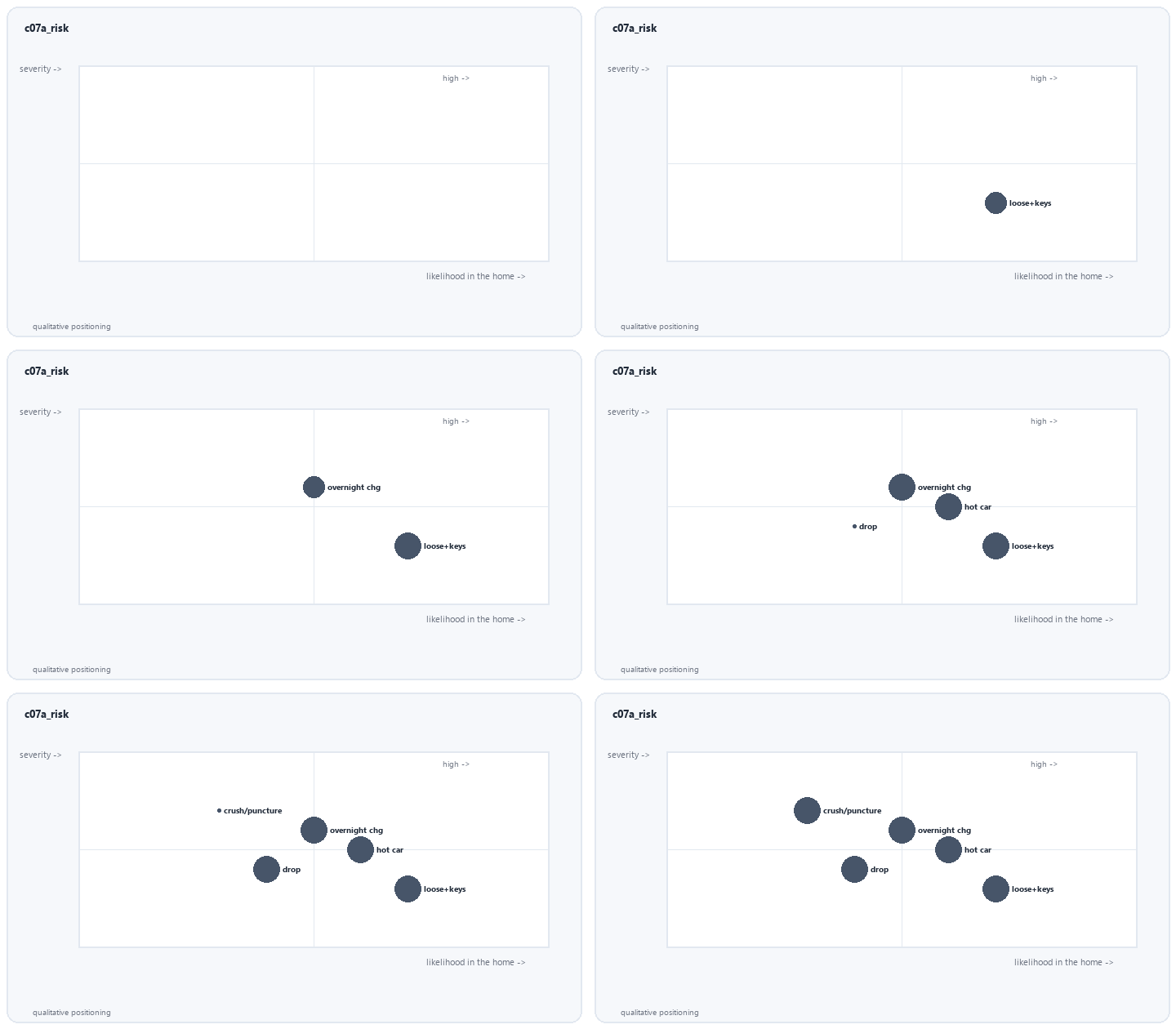
Where the contrast matters most is precisely where batteries are most exposed: loose cells in a pocket with keys (external short), devices in unattended charging overnight, toys subject to impact and heat, and packed luggage subject to crush and temperature. The animated risk comparison below maps common household and travel abuse scenarios against the response of aqueous NiMH and sealed lithium, qualitatively, showing where the chemistry difference removes a failure mode outright and where both chemistries rely on good design. Reading the map this way lets a brand target safety messaging at the scenarios customers actually worry about.
For a toy maker, a personal-care brand, a children's-product retailer or an airline passenger, the argument is: choose the chemistry whose worst credible failure is venting and failure rather than ignition, document it to the nickel-system safety standard (IEC 62133-1, covered in Paper C), and pair it with a charger that terminates correctly. Intrinsic aqueous safety is one of the few product advantages that grows stronger as the market becomes more safety-conscious and as regulators scrutinise lithium in consumer and travel contexts. Paper B shows how to design it into a pack; Paper C covers certification and the notable air-transport status of NiMH.
Weijiang Power manufactures intrinsically safer aqueous NiMH AA/AAA cells and packs for toys, personal-care and travel applications, documented to IEC 62133-1 with matched safe chargers. Tell us your device and misuse concerns and we will recommend a chemistry and protection design with safety evidence.


